
Was It Something I Did? Understanding Why a Miscarriage Happens

Almost everyone who loses a pregnancy goes back over the days and weeks before, searching for what they might have done wrong. Here we check the most common worries against the evidence, explain the chance chromosome changes behind many early losses, and look honestly at whether finding a cause helps.

For most people, the honest answer to 'was it me?' is no. The pregnancy charity Tommy's says it is very unlikely that a miscarriage was caused by anything you did or did not do.

If you keep going over it

Why the mind goes looking for a reason

After a miscarriage, many people replay everything: the gym class, the glass of wine at a party, the heavy suitcase, the row at work, the mornings they forgot their vitamins. When something this painful happens inside your own body, it can feel as though you must have played a part in it.

Knowing how often miscarriage happens can put these questions in context. Pooled data from studies around the world, published in The Lancet in 2021, suggest that about 15 in every 100 recognised pregnancies (roughly 1 in 7) end in miscarriage. A loss this common is not a sign that you failed at something other people manage.

Below, we set the most common worries against what research and UK guidance say. Some have no link at all, and a few have a real link that is easy to misread. For many early losses, the explanation lies in the chromosomes of the pregnancy, set at its very beginning.

Checking the usual worries

Common worries, checked against the evidence

These are among the things people most often blame themselves for. In their everyday form, none has been shown to cause miscarriage.

The worryWhat research and guidance say
Exercise, a run or a gym sessionBeing active is not a cause of miscarriage. The pregnancy is cushioned inside the womb, so jolts and movement do not dislodge it (Tommy's).
Having sex or an orgasmUnless you have been advised otherwise, sex and orgasm are safe and do not bring on a miscarriage (Tommy's). After several losses, some doctors suggest holding off in the early months of a future pregnancy.
Going to work, on your feet or at a desk all dayWorking full time, or standing or sitting for long stretches, does not appear to raise the risk. Night work, very long hours and exposure to solvents, lead or radiation have been associated with higher risk, which is different from proving they caused a particular loss (Miscarriage UK).
Lifting children, shopping or boxesPicking up a toddler or carrying the shopping is not a recognised cause, and Miscarriage UK lists heavy lifting among worries that do not seem to raise the risk. The evidence on very heavy loads lifted day after day as part of a job is less settled, so mention it to a doctor before a future pregnancy if it applies to you.
Stress, worry or an argumentMiscarriage UK finds no clear evidence of stress causing miscarriage, and lists everyday anxiety among worries that do not seem to raise the risk. Research has found a link between persistent, high levels of stress and miscarriage, but Tommy's notes this is hard to study well, and a link does not prove cause.
Flying, or eating spicy foodNeither has been shown to cause miscarriage (Tommy's; Miscarriage UK).
Not wanting the pregnancy at first, or thinking about ending itMiscarriage UK lists not wanting to be pregnant, or thinking about a termination, among worries that do not seem to raise the risk. Thoughts and feelings do not end a pregnancy.
A past abortionAn earlier termination does not make a later miscarriage more likely (Tommy's).
Getting pregnant soon after a birth or a previous miscarriageMiscarriage UK includes this among common worries that do not seem to increase the risk.

These points relate to ordinary daily life in a pregnancy with no known complications. If you had been given specific advice for your pregnancy, the team caring for you can talk it through.

Chance, not blame

What usually happens: a chance change in the chromosomes

Chromosomes are the tiny packages that carry genes. A pregnancy normally starts with 23 from the egg and 23 from the sperm, making 46. Occasionally something goes wrong, most often when the chromosomes are divided unevenly while the egg or sperm is maturing or just after fertilisation, when the first cells split. The pregnancy then has an extra or missing chromosome, or less often a whole extra set or a missing or extra piece of one, and cannot develop as it should.

Of all the known causes of early miscarriage, this is the most frequent. The Royal College of Obstetricians and Gynaecologists (RCOG) estimates that about 1 in 2 early miscarriages happen this way, and about 6 in 10 miscarriages tested in a laboratory show a chromosome change (Lancet 2021).

These are usually one-off accidents of cell division: in most cases neither parent has any chromosome problem of their own, and nothing either parent did caused it. The best-known factor is the age of the egg, with an extra chromosome becoming more likely as women get older. Our page on chromosomal causes describes each type.

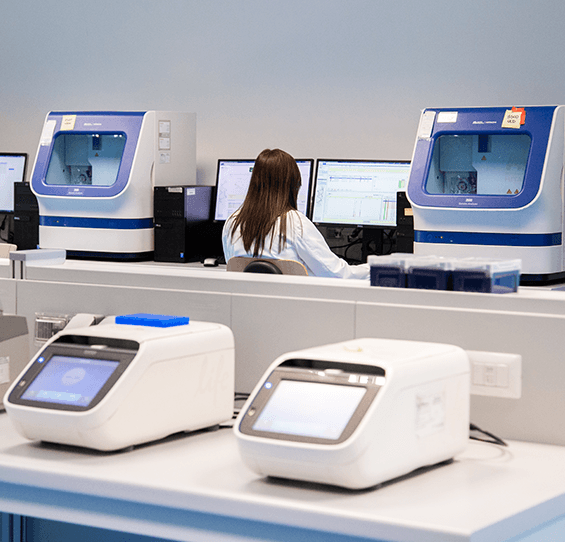
Laboratory bench with DNA analysis instruments, and a scientist at a computer in the background
Chromosome changes in a pregnancy can only be confirmed by testing in a genetics laboratory.

What the figures say about chance

Each figure describes large groups of pregnancies rather than predicting any one person's. Full references appear at the end of this page.

About 15 in 100 Recognised pregnancies that end in miscarriage, from pooled international data (Lancet 2021)
About 1 in 2 Share of early miscarriages that the RCOG attributes to a chromosome change in the pregnancy (2023)
About 6 in 10 Miscarriages tested in a laboratory that show a chromosome change (Lancet 2021)

Does knowing matter?

Four ways a cause can make a difference

Choosing not to find out is a reasonable decision too. For people who do want to know, a clear result can help in practical and emotional ways.

It can quieten self-blame

In a London study of 143 women whose missed miscarriage was found at a 10 to 14 week scan, those whose loss was explained by a chromosome change reported less self-blame than women given no cause (Nikcevic and colleagues, 1999).

It can inform the outlook for next time

Finding a chance chromosome change is usually reassuring for the future: allowing for age, the outlook is generally better than when a lost pregnancy had normal chromosomes (RCOG guideline, 2023). Age still matters, and this does not hold if a parent carries a rearrangement.

It shows whether parents need testing

If the pregnancy had an unbalanced rearrangement, with a piece of chromosome missing or extra, both parents are usually offered a blood test to see whether one carries a balanced version. Carriers are healthy themselves. Our page on parental karyotype explains more.

It can shape plans for another pregnancy

One North American study found that, after a miscarriage with a trisomy (an extra chromosome), a trisomy such as Down's syndrome was found at prenatal testing in a later pregnancy about 1.8 times as often as expected for the mother's age (Warburton and colleagues, 2004). The absolute chance stays low, and it is a reason to think about screening rather than to worry.

Honest limits

What testing cannot promise

Testing does not always produce an answer. Miscarriage UK is candid that you may never know exactly why a loss happened, and that uncertainty can be hard to live with. Tests can also fail: tissue is not always collected, the laboratory may not get a result, or the sample may turn out to contain the mother's cells rather than the pregnancy's.

A result showing no chromosome change is not a verdict on you. It means the test found nothing of the kind it looks for. Some causes are too small for standard tests to see, and some lie outside the pregnancy, such as antiphospholipid syndrome (a condition that makes blood more likely to clot), thyroid problems or the shape of the womb. These are usually looked for after recurrent miscarriage.

Knowing is also not the same as healing. In the London study above, a cause eased self-blame but made no difference to grief, anxiety or low mood. A later study by the same team found that counselling alongside a medical explanation helped grief and worry ease further, while women whose cause stayed unknown tended to remain more anxious (Nikcevic and colleagues, 2007).

Your choice

Questions that can help you decide

There is no right answer about testing. These questions may help you work out what matters to you, and what is still possible. You are welcome to go through them with us before deciding anything.

Would knowing whether a chance chromosome change was behind it change how you feel about the loss?

Is the pregnancy still in your womb? Some tests are only possible before it passes or is removed, so read testing before a miscarriage completes soon.

Has tissue already passed or been removed, and was any kept? If so, ask quickly whether it could be sent for pregnancy tissue testing.

Is this your first, second or third loss? That affects what the NHS offers and whether wider investigations make sense.

Are you thinking about another pregnancy, and would a result change how you plan for it? Preparing for the next pregnancy covers the practical steps.

Would you like someone to explain the options before you decide? Your early pregnancy unit can do this, and so can our genetic counsellors in an online appointment.

Support and next steps

Where to turn from here

For questions about what happened, your NHS early pregnancy unit or your GP is a good place to start, and their care is free. Under UK guidance (RCOG, 2023), chromosome testing of pregnancy tissue is usually offered from the third miscarriage, or after any second-trimester loss; Tommy's notes that in Scotland tests may be offered after two miscarriages. Some people choose to arrange testing privately sooner.

If self-blame or grief feels overwhelming, you do not have to carry it alone. You can phone Miscarriage UK on 0303 003 6464, or speak to one of Tommy's midwives free of charge on 0800 0147 800 between 9am and 5pm on weekdays. Your GP surgery or early pregnancy unit can also tell you about counselling.

Whether testing is arranged through the NHS or privately, it is worth asking which test will be used and what happens if the laboratory cannot get a result. Our genetic counsellors can go through both with you before any test is arranged.

How we can help

Talking it through with our team

If you would like to understand why your miscarriage happened, or whether it is worth looking for a cause, you can talk it through with our team. You can book directly, without a GP referral, and none of this replaces the free NHS care described above. London Miscarriage Clinic is part of London Pregnancy Clinic, so booking opens on the London Pregnancy Clinic website.

Online, 30 minutes

Genetic counselling

Time online with one of our registered genetic counsellors, who can help you weigh up whether looking for a cause makes sense for you, which tests are still possible, or what a result you already have means. It is also the first step if you would like pregnancy tissue tested. Partners are welcome, and there is no obligation to go on to a test. A 60-minute appointment (£140) suits a more complex history.

Only when indicated

Parents' chromosome test (karyotype)

A blood test that checks a parent's chromosomes for a balanced rearrangement. Under RCOG guidance it is mainly advised when pregnancy tissue showed an unbalanced rearrangement, or after recurrent miscarriage when no tissue result was available, so we suggest speaking to a genetic counsellor first. Testing both partners costs £550.

After repeated losses

Recurrent miscarriage package

A consultation and pelvic scan with a consultant gynaecologist at our City clinic, with blood tests that include checks for antiphospholipid syndrome and thyroid function. You book with a £300 deposit, which comes off the package price.

Questions about cause, blame and next steps

Might my partner's age or health have contributed?

A chance chromosome change can arise in the sperm as well as the egg, and the NHS lists the baby's father being 45 or over among things that may raise the chance of miscarriage. That is still not something anyone chose or could have prevented.

Rarely, one partner carries a balanced chromosome rearrangement that causes them no health problems but can lead to repeated losses. Our page on parental karyotype explains when this is looked for.

I had a cold or a stomach bug around that time. Could that be why?

Mild infections such as coughs and colds are not harmful in pregnancy, but very high fevers and some serious infections can raise the risk of miscarriage (Miscarriage UK), as can some types of food poisoning, such as listeria (Tommy's). Even so, Tommy's points out that having been ill does not necessarily mean the illness caused the miscarriage; it is likely to be a coincidence. If you were seriously unwell, mention it to your doctor.

I took painkillers or other medicines before I knew I was pregnant. Should I worry?

A small number of medicines are known to raise the risk, such as retinoid skin treatments and methotrexate, and some research has suggested a possible link with ibuprofen in early pregnancy (Tommy's). If you are worried about something you took, a GP or pharmacist can look at the medicine, dose and timing with you. If you take a prescribed medicine, do not stop it before a future pregnancy without advice.

If no cause is found, does that point back to me?

No. A result with no chromosome change only means that this particular test did not find one. Some causes cannot be detected with current tests, and many miscarriages stay unexplained even after full investigation. Not knowing why is not the same as having caused it.

Could something in my own body have caused it?

Sometimes. Conditions such as antiphospholipid syndrome, a thyroid condition, diabetes or a differently shaped womb can make miscarriage more likely (NHS), particularly when a long-term condition is not well controlled (Tommy's). They are less common than chance chromosome changes and are usually looked for after repeated losses. Our page on recurrent miscarriage explains the tests involved.

Do I need a GP referral to talk to you about why it happened?

No. You can book an online appointment with one of our genetic counsellors yourself, or contact us by phone or WhatsApp, and partners are welcome to join. If you meet the NHS criteria for investigations, for example after three miscarriages, testing is also available free through your hospital team, and we are happy to talk through which route suits you.

About this information

This page summarises general evidence about the causes of miscarriage. It cannot assess your own circumstances and does not replace an individual consultation, with us or with the clinicians who know your history. If you notice heavy bleeding, severe pain, a high temperature or faintness, seek help promptly from your early pregnancy unit or from NHS 111; in an emergency, call 999.

Contact

Questions about why it happened? Get in touch

Send us an enquiry

Ask us about testing, a result you already have or what to do next. This form is not for emergencies: if you have heavy bleeding or severe pain, call 999 or go to A&E.

For urgent matters please call 020 3687 2939.

Sources & clinical references

The figures and clinical statements on this page are drawn from the sources below. Guidance evolves — always discuss your individual circumstances with a clinician.

  1. Tommy'sWhat causes a miscarriage?2026
  2. Miscarriage UKCauses and risk factors of miscarriageAccessed October 2026
  3. NHSMiscarriage2026
  4. NHSFoods to avoid in pregnancy (caffeine and alcohol)2026
  5. The Lancet (Quenby et al.), accepted manuscript via University of WarwickMiscarriage matters: the epidemiological, physical, psychological, and economic costs of early pregnancy loss2021
  6. Royal College of Obstetricians and GynaecologistsRecurrent miscarriage (patient information)2023
  7. Royal College of Obstetricians and GynaecologistsRecurrent Miscarriage (Green-top Guideline No. 17)2023
  8. Alcoholism: Clinical and Experimental Research (Sundermann et al.)Alcohol use in pregnancy and miscarriage: a systematic review and meta-analysis2019
  9. Cochrane Database of Systematic Reviews (De-Regil et al.)Effects and safety of periconceptional oral folate supplementation for preventing birth defects2015
  10. British Journal of Obstetrics and Gynaecology (Nikcevic et al.)Investigation of the cause of miscarriage and its influence on women's psychological distress1999
  11. Journal of Psychosomatic Research (Nikcevic et al.)The influence of medical and psychological interventions on women's distress after miscarriage2007
  12. American Journal of Human Genetics (Warburton et al.)Trisomy recurrence: a reconsideration based on North American data2004