
£530Blood draw, laboratory analysis and your result explained
CLARITY: A Blood Test for the Pregnancy's Chromosomes
CLARITY is the name we use for niPOC, a test carried out by our partner laboratory, which specialises in genetics. After a scan confirms a miscarriage, and before the pregnancy has left your womb, a single sample of your blood can show whether the pregnancy carried a chromosome too many or too few. Nothing needs to be collected from the pregnancy itself.
Timing matters: the sample must be drawn ahead of tablets or surgery for the miscarriage, and before the pregnancy comes away by itself. The £530 fee pays for the laboratory analysis, for taking the sample at our City clinic, and for a clinician from our team talking you through the result. Whether to test is entirely up to you, and it should never get in the way of the care you need.
7 working daysFor results, counted from when the laboratory receives your sample
24 chromosomesEach checked for an extra or missing copy
Overview
What CLARITY is, and the moment it is meant for
The letters niPOC are short for non-invasive products of conception, the clinical phrase for pregnancy tissue. Rather than testing that tissue, CLARITY looks at the pregnancy's DNA circulating in your bloodstream, so all it asks of you is one ordinary blood sample, taken from your arm at our City clinic.
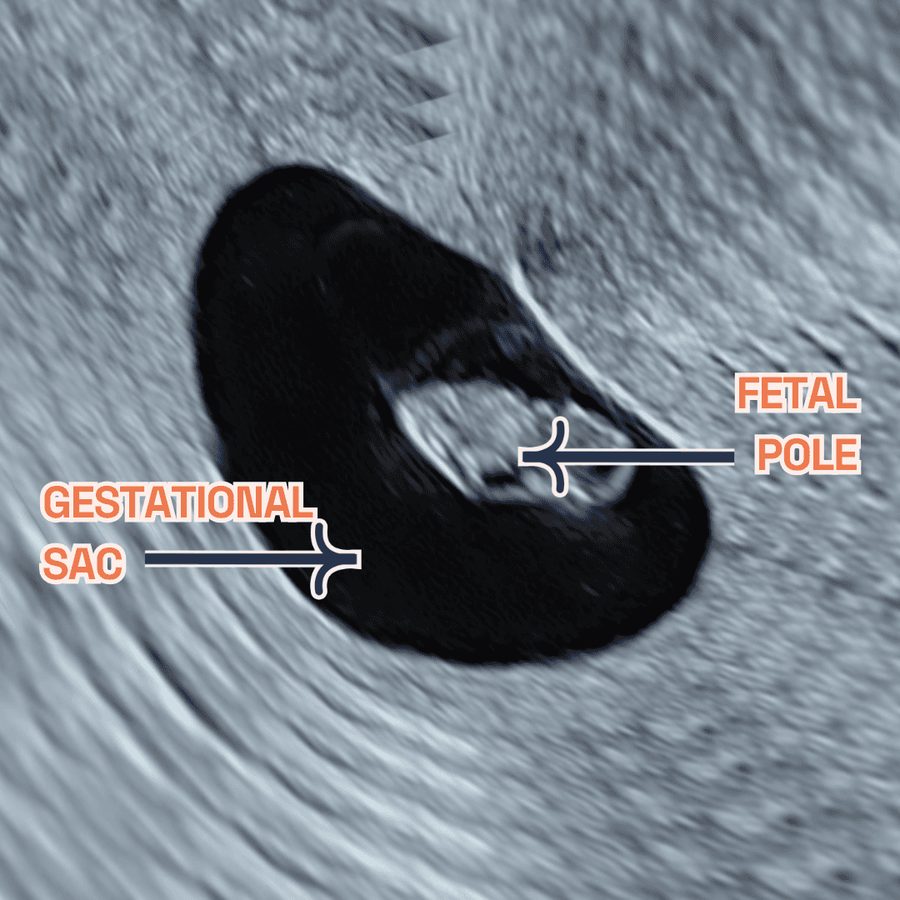
It fits one particular point in a miscarriage: after a scan has confirmed the loss, and before the pregnancy has left the womb. That covers a missed miscarriage and an empty pregnancy sac that has not yet come away.
What it sets out to answer is whether the pregnancy had one chromosome too many or one too few, or had lost or gained a sizeable section of one. Sometimes the result goes some way to explaining why the pregnancy stopped growing, yet no test can guarantee an answer, and deciding against testing is just as reasonable a choice.
Timing
Why the blood has to be taken before treatment
As long as the pregnancy remains inside the womb, its placenta goes on shedding tiny pieces of DNA into your circulation. Once the pregnancy comes away or is removed, that source stops, and a sample drawn later may not represent the pregnancy's chromosomes. That is why the laboratory needs the blood drawn ahead of any treatment: before surgery for the miscarriage, before miscarriage tablets, and before the pregnancy is passed on its own.
Thinking about CLARITY? Arrange the blood sample ahead of any treatment, preferably soon after the diagnosis, and let the team looking after you know, so the sample and your care can be timed together. If you are waiting for the miscarriage to happen naturally, the pregnancy may come away at any point, so an early decision makes things easier.
Testing should never hold up the care you need. If heavy bleeding, severe pain, a fever or faintness develop, get in touch with your early pregnancy unit, phone NHS 111, or ring 999 in an emergency. Treatment comes first, and we can talk about what testing is still possible afterwards.
If the miscarriage has already completed, pregnancy tissue testing may still be an option, and testing before the miscarriage completes explains how a sample can be fitted around waiting, tablets or surgery.
Is it for me?
CLARITY may suit you if
All of the following need to apply. If you are not sure about any of them, please call us before booking.
A scan has confirmed the miscarriage, for example a missed miscarriage or an empty pregnancy sac.
The pregnancy is still in the womb: you have not had surgery, have not started miscarriage tablets and have not passed the pregnancy.
It is a single pregnancy, not twins or more.
You want to find out if a chromosome change played a part, and you are able to visit our City clinic in London E1 to give the blood sample.
Before you book
When CLARITY is not suitable, or needs a word with us first
The pregnancy has already passed or been removed
After the womb has emptied, through surgery, tablets or on its own, CLARITY is no longer suitable, as a sample taken then may not mirror the pregnancy. If tissue was saved fresh, it may still be testable; see pregnancy tissue testing.
Twins or more
CLARITY is valid for single pregnancies only. If a scan has shown more than one pregnancy sac, please tell us before booking so we can talk through other options.
A recent blood transfusion, a transplant or stem cell therapy
Any of these can mean the result reflects DNA that is not the pregnancy's, so a change could be reported that the pregnancy did not have. Please mention them before booking.
Long-term heparin injections
Ongoing treatment with low-molecular-weight heparin, a blood thinner given by injection, may interfere with the analysis. Let us know if you are taking it.
Price
What the £530 price covers
CLARITY costs £530. That price includes:
- Having your blood taken at our City clinic in London E1.
- The niPOC analysis at the laboratory, which looks at all 24 chromosomes.
- Your result, explained to you by one of our clinicians.
A formal genetic counselling session is not part of the price. If you would like one, before deciding or once your result is back, our registered genetic counsellors offer a 30-minute online appointment for £80. A scan and tissue testing are also separate.
Bookings for London Miscarriage Clinic are handled on the London Pregnancy Clinic website: book the CLARITY blood test.
Step by step
What happens when you choose CLARITY
Book a time at our City clinic
Choose an appointment soon after the diagnosis and before any date set for tablets or surgery, and let your early pregnancy unit know your plan.
Consent and a blood sample
You sign the laboratory's consent form, which includes whether you want to hear about any rare incidental finding. Blood is then taken from your arm, as for any routine test. No pregnancy tissue is needed.
Your treatment goes ahead
Waiting, tablets or surgery continue as you and your care team have planned. If you are having surgery, you can ask whether tissue can also be kept fresh.
Laboratory analysis
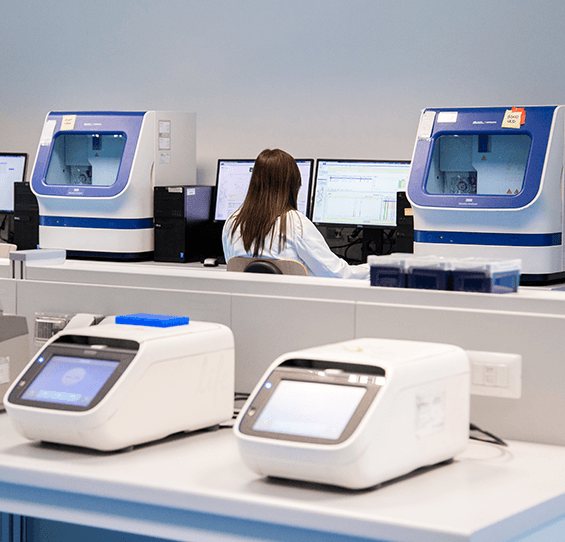
The laboratory extracts the pregnancy's cell-free DNA from your sample and sequences it to look at all 24 chromosomes. Results are due within 7 working days of the sample arriving, although a few take longer.
Your result, explained
One of our clinicians goes through the report with you. If the finding is complex or unexpected, genetic counselling or a consultation with our clinical geneticist can follow.
The science
What the laboratory looks at in your sample
Blood always carries short fragments of DNA floating freely outside cells. In pregnancy, a share of them is released by the placenta, which grows from the same fertilised egg as the embryo and usually carries the same chromosomes. The laboratory separates this cell-free DNA from your sample and sequences it.
Sorting the sequenced fragments by chromosome shows whether any of the 24 chromosomes (the 22 numbered pairs plus X and Y) is present in an extra or missing copy, and whether a piece larger than 7 Mb, roughly 7 million DNA letters, is missing or duplicated.
The bulk of the DNA in your sample belongs to you. When the share that comes from the pregnancy, called the fetal fraction, is below 2%, there is too little to analyse and no result can be given.
Detection
What CLARITY can and cannot pick up
No genetic test sees everything. This is what CLARITY reports on, and what falls outside it.
| Chromosome change | Does CLARITY check for it? |
|---|---|
| An extra or missing copy of any of the 24 chromosomes (aneuploidy) | Yes |
| A missing or duplicated piece larger than 7 Mb | Yes |
| A missing or duplicated piece smaller than 7 Mb | No |
| An extra whole set of chromosomes (triploidy or other polyploidy) | No |
| A balanced rearrangement, where nothing is missing or extra | No |
| Both copies of a chromosome inherited from one parent (uniparental disomy) | No |
| A change in a single gene | No |
| Mosaicism, a mix of cells with different chromosomes | Not reported, and levels below about 30% are not detected |
Where a complete trisomy affecting chromosome 13, 14, 15, 21 or 22 shows up, the test cannot distinguish it from one that arose because a parent carries a Robertsonian translocation (two chromosomes fused together) or an isochromosome. If this is relevant to you, a genetics specialist can advise whether testing either parent would be worthwhile.
Results
The four kinds of result CLARITY can give
It can help to think through how you might feel about each of these before the sample is taken.
A chromosome change is found
One or more changes are seen that could account for the pregnancy ending. One of our clinicians explains what the finding means and whether any further step, such as genetic counselling, would be useful. See understanding your result.
No change is found
Nothing was seen within what the test can detect. Some changes lie outside what CLARITY can see, so a genetic cause is still possible, and causes that are not genetic are not tested for.
No result
Now and then no result can be issued, usually because the sample holds too little DNA from the pregnancy, or because something went wrong with the sample. Fresh tissue, if any was kept, may still be tested.
An incidental finding
Very occasionally the analysis reveals an important genetic change unrelated to the miscarriage, which could matter for your own health. It is reported only if you agreed to be told on the consent form.
Alternatives
CLARITY and pregnancy tissue testing compared
The two are not either-or: a CLARITY sample taken before treatment leaves any tissue free to be tested as well. Pregnancy tissue testing explains how tissue is collected and analysed, and blood test or tissue test looks at the choice in more depth.
| Compared on | CLARITY blood test | Pregnancy tissue testing |
|---|---|---|
| Sample | One blood sample from you | Tissue from the pregnancy, passed naturally or removed during surgery |
| When it can be done | After the diagnosis, before tablets, surgery or the pregnancy passing | After the pregnancy has come away, if the tissue was kept fresh and out of preservative such as formalin |
| Works without any pregnancy tissue | Yes | No |
| Extra or missing whole chromosomes | Yes, across all 24 chromosomes | Yes |
| An extra whole set (triploidy) | No | Can be found with SNP-based microarrays, though not with every method |
| Smaller missing or extra pieces | Only pieces larger than 7 Mb | Chromosomal microarray can pick up much smaller pieces |
| On the NHS | Not part of routine NHS care; CLARITY is a private test | Normally offered after three miscarriages, or after a loss in the second trimester |
| How it starts with us | Book online for a blood draw at our City clinic | Starts with a genetic counselling appointment rather than an online booking |
Limitations
Limitations to weigh up before you decide
- It depends on the pregnancy being inside the womb when the blood is drawn, so it is unsuitable once surgery, tablets or a natural miscarriage have emptied the womb.
- It is valid for single pregnancies only.
- Triploidy and other additional full sets of chromosomes, balanced rearrangements, uniparental disomy, single-gene conditions and changes under 7 Mb are all beyond what it can see.
- A result showing no change cannot exclude a genetic cause, and non-genetic causes of miscarriage are not looked at.
- Some samples give no result, most often because there is too little pregnancy DNA.
- Now and then the result mirrors your chromosomes instead of the pregnancy's, or is distorted by a recent blood transfusion, a transplant or stem cell therapy; heparin injections (low-molecular-weight heparin) taken over a long period may also interfere.
- It reads DNA from the placenta, whose chromosomes occasionally differ from the embryo's.
- It cannot prevent a future miscarriage. Its value lies in understanding what happened and planning what comes next.
Your options
CLARITY, the NHS and the research behind blood testing
Whatever you decide about testing, confirming the miscarriage and providing your treatment and aftercare stay with your NHS early pregnancy unit. When the NHS tests a miscarriage genetically, it uses tissue from the pregnancy, normally after three miscarriages or a loss in the second trimester, so a first or second early miscarriage is not routinely tested. Blood-based testing is not part of routine NHS care; CLARITY is a private test.
Testing blood after a miscarriage is newer than testing tissue, and UK research, including a study at Tommy's National Centre for Miscarriage Research, is still assessing it. What the published studies have found, including how blood results compare with tissue results, is set out in the blood test explained.
Whatever you decide, support is available from Miscarriage UK on 0303 003 6464 and from Tommy's on 0800 0147 800.
How we can help
Booking CLARITY, and the support around it
You do not need a referral, and your NHS early pregnancy unit can carry on looking after your treatment. London Miscarriage Clinic is part of London Pregnancy Clinic, so booking opens on the London Pregnancy Clinic website. If a treatment date is close, call us or send a WhatsApp message.
Blood draw · City clinic, E1
CLARITY miscarriage blood test
One blood sample, drawn at our City clinic in London E1 ahead of tablets, surgery or the pregnancy coming away, which the laboratory checks for chromosomes that are extra or missing. Expect results within 7 working days of the sample reaching the lab, followed by a conversation with one of our clinicians about what they mean.
Online, 30 minutes
Genetic counselling
Optional, and separate from the CLARITY price. A video appointment with one of our registered genetic counsellors can help if you are unsure whether to test, or if you would like more time with a complex or unexpected result. A 60-minute appointment is also available.
6–9 weeks · City or West
Repeat early scan
Where the diagnosis is still uncertain, national guidance recommends a second scan before a miscarriage is confirmed. Our viability scan, available at both clinics, can provide this and also shows whether the pregnancy remains in the womb. The CLARITY price does not include a scan.
Doctor-led, by enquiry
Clinical genetics consultation
If a CLARITY result is unexpected or hard to interpret, for example a finding that may originate in your own DNA, or a deleted or duplicated section of a chromosome, our Consultant in Clinical Genetics, Dr Harry Leitch, can review the report alongside your history. Appointments are arranged by enquiry.
Questions
Questions about the CLARITY blood test
Can I have the CLARITY blood test?
Possibly, if three things are true: a scan has confirmed the miscarriage, the pregnancy has not yet left your womb, and there is only one pregnancy, not twins or more. Your blood needs drawing before surgery, before any miscarriage tablets and before the pregnancy comes away on its own. The £530 fee includes taking the sample at our City clinic, laboratory analysis and one of our clinicians going through your result, which is due within 7 working days of the sample reaching the laboratory. Not sure it is right for you? Call us before you book.
I have already started miscarriage tablets. Is it too late?
The laboratory asks for the sample to be taken before any miscarriage medication, so CLARITY is not designed for use once tablets have been started. Please call us before booking so we can talk through your situation, and please do not delay or skip a tablet to fit in a test. Tissue that is kept fresh may still be suitable for tissue testing.
Do you need any tissue from the pregnancy?
No. CLARITY works from your blood alone. Having the blood test first does not stop the tissue being tested later, if it is collected and kept fresh, and a tissue test can sometimes add detail, for example about triploidy, which CLARITY cannot see. See blood test or tissue test.
How long does the result take?
The laboratory aims to report within 7 working days of receiving the sample, although a small number take longer for reasons outside anyone's control, such as transport problems. When the report arrives, one of our clinicians explains it to you.
Is genetic counselling included?
No. Within the £530 fee, one of our clinicians explains your result, but a formal genetic counselling session is extra. Should you want one, our registered genetic counsellors run a 30-minute online appointment costing £80, and a clinical genetics consultation may help with a complex or unexpected finding.
Will CLARITY tell me why I miscarried?
It might. Finding a chromosome change in the pregnancy can sometimes go some way to explaining the loss, and can feed into plans for another pregnancy. Equally, when no change is seen, a genetic cause is still possible: CLARITY cannot detect every kind of change and does not examine non-genetic causes. After several losses, broader investigations are usually recommended regardless of the result; see recurrent miscarriage.
Could the result say something about my own health?
Rarely. Because the bulk of the DNA in your sample is yours, the result can very occasionally pick up a chromosome change in your own cells instead of the pregnancy's.
A recent blood transfusion, a transplant or stem cell therapy can do the same, and heparin injections (low-molecular-weight heparin) used over a long period may disrupt the analysis, so let us know about any of these beforehand.
On rare occasions the analysis also uncovers a significant genetic finding with no connection to the miscarriage; you are told about it only if you agreed to this on the consent form. See understanding your result.
Can CLARITY be used if I was carrying twins?
No. The laboratory accepts the CLARITY sample only from a single pregnancy, so the test is not an option with twins, triplets or more. If your scan showed more than one pregnancy, call us before booking and we can go through what else might be possible.
Do I need a referral?
No. You can book CLARITY yourself, and your NHS early pregnancy unit can carry on managing your treatment. Please let them know your plan, so that the blood sample is taken before any tablets or surgery.
About this information
The information here is a general guide to CLARITY, not personal medical advice, and it does not mean the test is the right choice for you. Care always comes before testing. Should heavy bleeding, severe pain, fever or faintness occur, phone NHS 111 or your early pregnancy unit at once, and in an emergency, dial 999.
Contact
Questions about CLARITY?
Sources & clinical references
The figures and clinical statements on this page are drawn from the sources below. Guidance evolves — always discuss your individual circumstances with a clinician.
- Prenatal Diagnosis (Pauta et al.)Genome-wide cell-free DNA analysis for aneuploidy detection in miscarriages: test performance meta-analysis2025
- The Lancet (Schlaikjaer Hartwig et al.)Cell-free fetal DNA for genetic evaluation in Copenhagen Pregnancy Loss Study (COPL): a prospective cohort study2023
- Human Reproduction (El Sammaa-Aru et al.)How big is the time window for cell-free fetal DNA testing after pregnancy loss and which factors are associated with a successful result?2026
- Human Reproduction (Yaron et al.)Maternal plasma genome-wide cell-free DNA can detect fetal aneuploidy in early and recurrent pregnancy loss and can be used to direct further workup2020
- Genes (Bedei et al.)Chances and challenges of new genetic screening technologies (NIPT) in prenatal medicine from a clinical perspective: a narrative review2021
- RCOGRecurrent Miscarriage (Green-top Guideline No. 17)2023
- Tommy'sUsing fetal DNA to detect chromosomal abnormalities following miscarriageAccessed October 2026
- NICEEctopic pregnancy and miscarriage: diagnosis and initial management (NG126)2026