
Miscarriage in Numbers: How Often It Happens and How Age Changes the Chance

Of every 100 recognised pregnancies, about 15 end in miscarriage, according to pooled research published in The Lancet in 2021, and the chance climbs with age. Here we line up the most quoted UK figures, name the source behind each, and explain why trusted sources sometimes disagree.

Figures describe large groups of people. They cannot tell you why your own pregnancy ended or what will happen next time, but our genetic counsellors can help you set them against your own age, history and results.

Before you start

A note on reading these figures

Each number below describes thousands of pregnancies in a particular country and period, so none can explain why your own pregnancy ended or promise what comes next. We give figures as a number in 100 to make comparison easier and credit each one to its source. Where respected sources disagree, we show both versions side by side.

At a glance

Six figures that come up most often

Rounded, with the source of each in brackets. Full references are at the foot of the page.

About 15 in 100 Recognised pregnancies ending in miscarriage, pooled international data (Lancet, 2021)
Up to 1 in 5 Miscarriage in the first three months, the RCOG's estimate (RCOG, 2016)
About 1 in 2 Early miscarriages the RCOG (2023) puts down to an unusual number or arrangement of chromosomes
37 or 51 in 100 Chance at age 40 to 44: pooled data (Lancet, 2021) compared with the Danish figures used by the RCOG
About 1 in 100 Women with three or more miscarriages, the UK threshold for recurrent miscarriage (RCOG, 2023)
Around 3 to 6 in 100 Couples with recurrent miscarriage where one partner has a balanced chromosome rearrangement (NICE CKS; RCOG, 2023)

Frequency

How often a pregnancy ends in miscarriage

A widely cited recent estimate comes from a 2021 Lancet review by Quenby and colleagues, which pooled large studies from several countries. It put the figure at about 15 miscarriages for every 100 recognised pregnancies, or roughly 1 in 7. That amounts to an estimated 23 million miscarriages worldwide each year.

Other UK sources give ranges. NICE's Clinical Knowledge Summaries quote 8 to 24 in 100 clinically recognised pregnancies, adding that the true rate is probably higher because many losses happen before a pregnancy is known about. The RCOG's 2016 leaflet on early miscarriage gives up to 1 in 5 in the first three months.

Most losses happen early: about 8 in 10 are in the first trimester (NICE Clinical Knowledge Summaries). The NHS in England calls a miscarriage before 14 weeks early, and one from 14 to 23 weeks late.

Some of the spread comes down to timing. As a Norwegian study in the BMJ (Magnus and colleagues, 2019) explains, losses cluster around the time a pregnancy is first recognised, so the overall rate depends on how early pregnancies are picked up.

Age

Miscarriage by age: the main sets of figures side by side

Two sets of age figures circulate widely in the UK, and they do not match. One comes from the pooled Lancet analysis (2021), which Tommy's also uses. The other appears in the RCOG's 2023 recurrent miscarriage leaflet and is based on a Danish study in the BMJ (Nybo Andersen and colleagues, 2000).

A third column adds a more recent Norwegian national study (BMJ, 2019). Each cell is the approximate number of pregnancies in 100 that ended in miscarriage.

Your age when pregnantPooled studies (Lancet 2021)Denmark 1978 to 1992, as used by the RCOGNorway 2009 to 2013 (BMJ 2019)
Under 20About 16About 13 (ages 12 to 19)About 16
20 to 24About 12About 11About 11
25 to 29About 12About 12About 10
30 to 34About 14About 15About 11
35 to 39About 18About 25About 17
40 to 44About 37About 51About 32
45 and overAbout 65About 93About 54

The RCOG leaflet merges all ages under 35 into one band of 11 to 15 in 100; the rows here use the Danish study's own bands.

Estimates for 45 and over are the least certain. The Lancet figure rests on fewer than 1,700 pregnancies from two studies, and the true value could plausibly be anywhere from about 50 to 85 in 100. The Danish study's own main estimate for this group was about 75 in 100; the 93 comes from the adjusted calculation explained below.

Why they differ

Why the age figures do not agree

Below 35 the three sources sit close together; from the mid-30s the Danish-based figures pull well ahead. The gap is less about right and wrong than about what each study measured, where and when.

Miscarriages were counted differently

The Danish register only recorded miscarriages that led to a hospital admission. The RCOG's figures come from an extra calculation in that paper assuming just 8 in 10 miscarriages reached hospital, which raises every age group. Its main results were lower: about 9 in 100 at 20 to 24 and about 75 in 100 at 45 and over.

The data come from different decades

The Danish figures date from 1978 to 1992. The authors note that, in the past, older mothers were more often women with low fertility or many earlier pregnancies, whereas many people now delay starting a family for social reasons. That can alter how strongly age and miscarriage appear to be linked.

Abortions were handled differently

A pregnancy ended by abortion can no longer miscarry, which can skew the figures, mainly for the youngest and oldest age groups. The Norwegian study used national abortion records to correct for this; overall it found about 13 in 100.

Pooling evens out single studies

The Lancet combined two to six studies per age band, from several countries. That lessens the pull of any one population but mixes different methods, so each figure carries a margin of uncertainty.

Age and chromosomes

Why the chance rises with age

Whichever data set you use, the shape is the same: lowest in the twenties, edging up in the early thirties and rising more steeply from the late thirties, especially after 40. In all three, the figure for teenagers is also slightly higher than for women in their twenties. The sources disagree on how steep the rise is, not on whether it happens.

The usual explanation lies in the egg. The RCOG explains that egg quality falls with age, and ESHRE's 2022 guideline notes that the proportion of miscarriages due to a chromosome change rises with the mother's age. Our page on chromosomal causes explains which types of change are linked to age.

The RCOG leaflet adds that miscarriage may be more common when the father is over 40, and the Lancet review counts older male age among its risk factors.

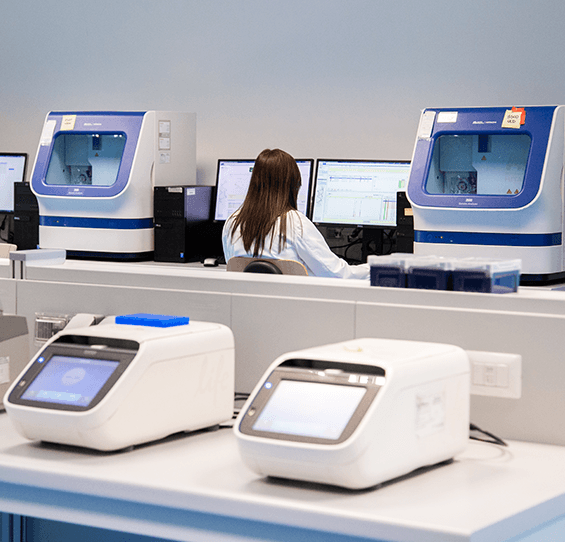
A genetics laboratory with DNA analysis instruments on the benches and a scientist working at a computer
Only laboratory testing can confirm whether a pregnancy had a chromosome change.

Chromosomes

How many miscarriages involve a chromosome change?

Chromosome changes in the pregnancy are the commonest identified cause of early miscarriage. The RCOG puts the share at about 1 in 2. In the Lancet review, roughly 60 in 100 tested samples of miscarriage tissue showed one, and the ESHRE guideline quotes around 45 in 100 after a single loss.

Methods matter. The RCOG's 2023 guideline notes that newer whole-genome tests pick up small missing or extra pieces of chromosome in 5 to 7 more miscarriages out of every 100, though not all of these findings explain the loss.

The share tends to fall as losses add up, according to NICE's Clinical Knowledge Summaries. ESHRE gives about 39 in 100 for a miscarriage after recurrent losses, which it regards as comparable to the 45 in 100 after a single loss. The RCOG guideline also links repeated chromosomally normal miscarriages with a higher chance of another, which may point to causes outside the pregnancy's chromosomes. Only testing the pregnancy itself shows what happened in your case.

Repeated losses

How common it is to have more than one miscarriage

UK guidance (RCOG, 2023) defines recurrent miscarriage as three or more early losses, not necessarily one after another; European guidance (ESHRE, 2022) counts two or more. Which definition is used changes how many people are included.

Pregnancy historyShare of womenSource
One miscarriageAbout 11 in 100Lancet 2021
Two miscarriagesAbout 2 in 100Lancet 2021
Three or more miscarriagesAbout 1 in 100 (0.7 in 100 in the pooled data)RCOG 2023; Lancet 2021
Two or more, counted togetherAbout 2 to 3 in 100 (2.6 in 100)Lancet 2021

Lancet figures are the proportion of women in the general population with that number of miscarriages.

Parents' chromosomes

How often a parent's own chromosomes are involved

In most chromosomal miscarriages, both parents' chromosomes are normal and the change arose by chance as the egg or sperm formed, or in the first cell divisions (RCOG, 2023). Less often, one partner has a balanced rearrangement, meaning none of their chromosome material is missing but some of it sits in a different place. They are healthy, but a pregnancy can inherit an unbalanced version.

Estimates range from about 3 to 5 in 100 cases of recurrent miscarriage (NICE Clinical Knowledge Summaries) to about 6 in 100 couples after three miscarriages (RCOG leaflet, 2023). That is one reason UK guidance recommends testing pregnancy tissue first and checking parents only in particular situations, as our page on testing parents' chromosomes explains.

A rearrangement does not rule out a family. A Dutch study (Franssen and colleagues, BMJ 2006) followed couples with two or more miscarriages for almost six years on average: a healthy child was born to 83 in 100 carrier couples and 84 in 100 non-carrier couples, though carriers more often miscarried again (about 49 against 30 in 100).

Looking ahead

What the figures say about the next pregnancy

This is often the figure people most want, and the hardest to pin down. Some studies count only the next pregnancy; others follow people for years.

01

After one miscarriage

In the pooled Lancet data, the chance of miscarriage was about 11 in 100 with no previous loss and about 20 in 100 after one. Seen the other way round, roughly 8 in 10 pregnancies that followed a single miscarriage did not end in another.

02

After two or three

The same data give about 28 in 100 after two and about 42 in 100 after three or more, and the Norwegian study (BMJ, 2019) found the same stepwise rise. Stark as that looks, it means more than half of pregnancies after three or more losses did not miscarry.

03

Over several years

ESHRE quotes a Danish follow-up of patients seen at a specialist unit for repeated pregnancy loss (Lund and colleagues, 2012). Within five years, about 7 in 10 women who had lost three pregnancies had a baby, as did about 5 in 10 of those who had lost six or more. Age made a difference as well: about 8 in 10 at 20 to 24, against about 4 in 10 at 40 or over.

Across the studies ESHRE cites, roughly 2 in 3 to 3 in 4 people with recurrent miscarriage go on to have a baby. The Lancet review gives a wider span of 50 to 90 in 100, depending on the definition used and the group studied.

04

When a chromosome change was found

Once age is allowed for, a loss caused by a chromosome change generally carries a better outlook than one with normal chromosomes (RCOG guideline, 2023), unless a parent carries a rearrangement. Planning after a chromosomal miscarriage looks at screening options for next time.

Other links

Other things linked with a higher chance

Large studies find miscarriage more often in some groups. A link across thousands of pregnancies does not prove that any one factor caused a particular loss. If you are worried about a drink, a cigarette, exercise or stress around conception, was it something I did? weighs up the evidence.

  • Previous miscarriages (Lancet 2021; Norwegian study, BMJ 2019).
  • A body mass index below 19 or above 25 (RCOG leaflet, 2023).
  • Smoking and drinking alcohol (Lancet 2021), and caffeine above the RCOG's recommended limit of 200 mg a day, which the RCOG says may raise the chance.
  • Black African or Black Caribbean heritage; the RCOG says the reasons are not yet fully understood.
  • Night shifts, air pollution and pesticide exposure, listed as associations in the Lancet review.

Using the numbers

Questions to ask when you are given a figure

Whether a number comes from a doctor, a website or a friend, these questions help you judge how far it fits you.

Which study or organisation is it from, and how old are the data?

Does it count every miscarriage, or only those treated in hospital?

Does it apply to my age group and my history?

Is it the chance of another miscarriage, or of having a baby, and over what time?

Would knowing whether my last pregnancy had a chromosome change alter it?

Could my own chance be estimated? The RCOG leaflet points to an online tool from Tommy's for this.

Support

Talking your own figures through

General figures are a starting point. Your GP, early pregnancy unit or, after repeated losses, an NHS recurrent miscarriage clinic can weigh your age, history and results together, free of charge. The NHS advises seeing a GP after three or more miscarriages, and you will usually be referred for tests. RCOG guidance (2023) recommends offering chromosome testing of pregnancy tissue from a third miscarriage onwards, and after any second-trimester loss.

If the numbers have brought up grief or worry, Miscarriage UK's support line is 0303 003 6464, and Tommy's midwives take free calls on 0800 0147 800.

If you would like to go through your own figures privately, our genetic counsellors can talk a result or your chances through by video, and after repeated losses our consultant gynaecologists offer a recurrent miscarriage assessment. The appointments are set out below, and they sit alongside any NHS care you are already receiving.

A woman with long dark hair in a blue patterned blouse, seated in a bright consulting room and looking towards the camera
A specialist can set general figures against your own age, history and results.

How we can help

How London Miscarriage Clinic can help

Figures can only go so far. If you would like to talk about your own chances, look into repeated losses or plan an early scan next time, these are the appointments we offer. You can book directly, without a referral, or call us if you are not sure which fits. London Miscarriage Clinic is part of London Pregnancy Clinic, so booking opens on the London Pregnancy Clinic website.

Online, 30 minutes

Genetic counselling

A video appointment with one of our registered genetic counsellors to set the figures on this page against your own age, pregnancy history and any results. They can explain what a chromosome finding means for next time and whether testing would add anything; nothing is arranged unless you want it, and partners are welcome. A 60-minute appointment suits a more complex history.

After repeated losses

Recurrent miscarriage package

A consultation and pelvic scan with one of our consultant gynaecologists, with blood tests for recognised causes such as antiphospholipid syndrome (lupus anticoagulant and anticardiolipin antibodies) and thyroid problems. Booking takes a £300 deposit, which comes off the package price. Parents' chromosome tests are separate and, in line with UK guidance, are only needed in particular situations.

Only when indicated

Parents' chromosome test (karyotype)

Checks one or both partners' chromosomes for a balanced rearrangement. It is not a routine test: it is most useful when pregnancy tissue showed an unbalanced rearrangement, or when tissue from repeated losses could not be tested. Results typically take two to three weeks. Testing a couple is £550.

Next pregnancy · 6–9 weeks

Viability scan

Once you are pregnant again, one of our fetal medicine specialists looks for the heartbeat, dates the pregnancy and checks how many babies there are, with images and a written report. A scan cannot change the outcome, but some people find it helps to be seen early after a loss. Available at our City or West London clinic.

Your questions about the numbers

Why do websites quote such different figures for how common miscarriage is?

Mostly because they count different things. Some include only pregnancies confirmed by a scan or hospital visit; others try to capture losses soon after a positive test. Some figures are decades old, others pooled from several countries. The Lancet's 15 in 100 sits inside the range of 8 to 24 in 100 quoted by NICE's Clinical Knowledge Summaries.

I am in my late 30s. Is my chance of miscarriage really 1 in 4?

That figure comes from the Danish study (1978 to 1992) used in the RCOG leaflet, which gives about 25 in 100 at 35 to 39 after an upward adjustment for miscarriages that never reached hospital. The pooled Lancet data give about 18 in 100 and the Norwegian study about 17 in 100. Previous miscarriages also shift the figure, so ask your doctor to put it in context.

Do most miscarriages happen in the first three months?

Yes. About 8 in 10 happen in the first trimester, according to NICE's Clinical Knowledge Summaries. A miscarriage from 14 weeks, which the NHS calls late, is much less common.

If chromosomes explain about half of miscarriages, what explains the rest?

Often no specific cause is found. In the UK, investigations are not routinely offered after one or two early miscarriages, and even after recurrent miscarriage the RCOG says it is very common for no cause to be identified. Known contributors include antiphospholipid syndrome (a condition affecting blood clotting), certain womb shapes and genetic changes too small for standard chromosome tests.

A normal chromosome result does not exclude these (ESHRE, 2022), which is why further tests follow recurrent miscarriage. Our recurrent miscarriage page describes them.

Are miscarriage rates going up?

It is unclear. From a limited number of studies, the Lancet review found rates appear to be rising in the USA, China and Sweden and falling in Finland, possibly because people are becoming pregnant later, though the reasons are uncertain. UK trends are hard to follow: the review noted that hospital admissions for miscarriage had not been included in the UK maternity statistics report since 2013.

Can a statistic tell me why my own pregnancy ended?

No. A figure such as 1 in 2 describes how often chromosome changes turn up across many miscarriages, not whether one was present in yours. Only testing the pregnancy can show that, from tissue or sometimes from a blood sample taken before the miscarriage completes, and even then a cause is not always found. What can I test now? sets out the options.

Can I talk through my own chances with your team without a referral?

Yes. You can book an online genetic counselling appointment directly, without a GP referral, and your partner is welcome to join. Our genetic counsellors can go through your age, pregnancy history and any test results, explain which published figures are closest to your situation and what they cannot tell you, and say whether further testing would add anything.

If you have had three or more miscarriages, the NHS also advises talking to your GP, who will usually refer you for tests.

About this information

These figures come from published research and UK guidance and describe groups, not individuals. This page cannot account for your own history and is not a substitute for advice from a doctor or midwife who knows you. Seek urgent help if you are bleeding heavily, in severe pain, feverish or feeling faint: your early pregnancy unit or NHS 111 can advise, and 999 is for emergencies.

Contact

Want to talk through your own figures?

Send us an enquiry

Ask about a result, your own chances or which appointment would suit you. Not for emergencies. If you have heavy bleeding, severe pain or feel faint, phone 999 or go to A&E.

For urgent matters please call 020 3687 2939.

Sources & clinical references

The figures and clinical statements on this page are drawn from the sources below. Guidance evolves — always discuss your individual circumstances with a clinician.

  1. The Lancet (Quenby et al.), accepted manuscript via University of WarwickMiscarriage matters: the epidemiological, physical, psychological, and economic costs of early pregnancy loss2021
  2. Royal College of Obstetricians and GynaecologistsRecurrent miscarriage (patient information)2023
  3. Royal College of Obstetricians and GynaecologistsEarly miscarriage (patient information)2016
  4. Royal College of Obstetricians and GynaecologistsRecurrent Miscarriage (Green-top Guideline No. 17)2023
  5. BMJ (Nybo Andersen et al.)Maternal age and fetal loss: population based register linkage study2000
  6. BMJ (Magnus et al.)Role of maternal age and pregnancy history in risk of miscarriage: prospective register based study2019
  7. NICE Clinical Knowledge SummariesMiscarriage: how common is it?2023
  8. NICE Clinical Knowledge SummariesMiscarriage: risk factors2023
  9. Tommy'sWhat causes miscarriage? (includes risk of miscarriage by age)2026
  10. European Society of Human Reproduction and Embryology (ESHRE)Recurrent pregnancy loss guideline, update 20222023
  11. BMJ (Franssen et al.)Reproductive outcome after chromosome analysis in couples with two or more miscarriages: index-control study2006
  12. NHSMiscarriage2026