Making Sense of a Miscarriage: Causes, Chromosomes and Testing

Causes, testing and support

NHS and private routes

Miscarriage is common, and its most frequent recognised cause is a chance chromosome error in the pregnancy, not something you did. At London Miscarriage Clinic we help you understand why a loss may have happened, whether genetic testing could explain it, and which options are still open to you.

Start here

If you are here after a loss

These pages are for anyone trying to understand a miscarriage: whether a scan has just shown that a pregnancy has stopped developing, a loss happened some time ago, or you have been through more than one. Partners, family and friends are welcome here too.

We explain what is known about why miscarriages happen, especially the part chromosomes play, and the tests that can sometimes show why a pregnancy stopped developing. We describe NHS care first and private options second, including our own, and we set out the limits of every test as well as its uses.

There is no right order to read them in. You can follow the questions below one at a time, go straight to the page that matches where you are today, or get in touch if you would rather talk it through with us.

If the pregnancy is still in the womb, timing matters

If a scan has shown the pregnancy has stopped developing but it has not yet come away, one type of genetic test, a blood test, works best while the pregnancy tissue is still there, and tissue testing depends on how the tissue is collected. Reading about this before deciding on treatment keeps more choices open.

Read about the testing window

The basics

Six things worth knowing first

These six points sit underneath almost everything on this site. Each one links to a fuller explanation if you want to read more.

None of them can tell you on their own what happened in your pregnancy. Together, they explain why testing is sometimes worth considering, and why the timing of that decision can matter.

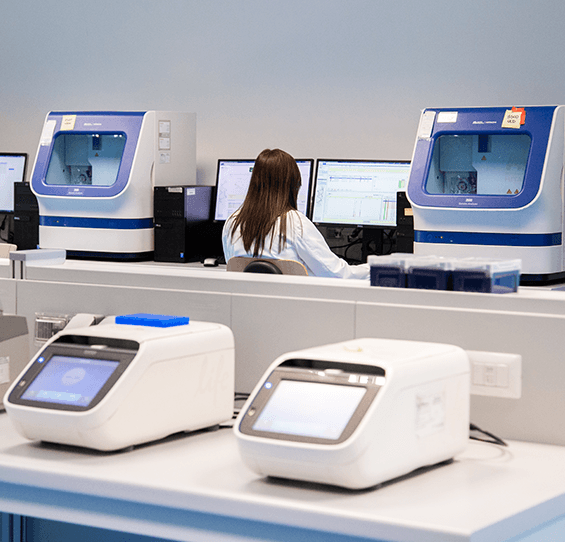
A scientist working at a computer in a genetics laboratory, with DNA analysis machines on the benches
Genetic tests read the pregnancy's chromosomes, from tissue or, in some cases, from DNA in the blood

Miscarriage is common

About 15 in every 100 recognised pregnancies end in miscarriage, roughly 1 in 7, and most of these losses happen in the first three months. Being common does not make it hurt less, but it does mean you are far from alone. How common miscarriage is.

Chromosomes are the most common recognised cause

About half of early miscarriages happen because the pregnancy had the wrong number or arrangement of chromosomes. This is usually a one-off chance event as the egg or sperm forms, or in the first cell divisions, and not caused by anything either parent did. Chromosomal and genetic causes.

The chance rises with age

Chromosome errors in eggs become more common as women get older, so the chance of miscarriage rises with the mother's age, more sharply after 40. Different studies put the figures at different levels, which our statistics page explains.

Testing can sometimes explain why

A genetic test of the pregnancy can show whether a chromosome change was present. When one is found, it often accounts for the loss and is linked with a better outlook next time than a loss with normal chromosomes. A cause is not always found, and a normal result does not rule out other causes. What results mean.

Your options depend on where the pregnancy is

While the pregnancy is still in the womb, a blood-based test that looks at placental DNA may be possible, and tissue can often, though not always, be collected for testing when it passes or is removed. Once it has passed, testing depends on whether tissue was kept. Which test may suit you.

Some options are time-sensitive

Placental DNA in your blood falls over the hours and days after the pregnancy tissue has passed or been removed, and tissue placed in preservative (formalin) usually cannot be tested. Asking about testing before it passes, or before tablets or surgery, keeps more options open. The testing window.

In numbers

Miscarriage and chromosomes in numbers

These figures describe large groups of people, not any one pregnancy. Each is listed with its source at the foot of this page.

About 15 in 100 recognised pregnancies end in miscarriage, according to pooled data from many studies (Quenby et al., Lancet 2021)
About 1 in 2 early miscarriages are caused by a chromosome abnormality in the pregnancy (RCOG, 2023). Of miscarriages that are tested, about 6 in 10 show one (Lancet 2021)
12 vs 37 in 100 approximate chance of miscarriage at age 20 to 29 compared with 40 to 44, in pooled data (Lancet 2021). An older Danish study used by the RCOG gives higher figures from 35 onwards: about 25 in 100 at 35 to 39 and 51 in 100 at 40 to 44

Step by step

From what happened to what comes next

1

Something has happened

A scan or symptoms suggest a miscarriage. Before a missed miscarriage is confirmed, NICE guidance asks for a repeat scan at least 7 days later. Only when an internal scan shows the pregnancy has reached a set size can a second opinion from another specialist be used instead. The Just diagnosed pages below cover this stage.

2

Why did it happen?

About half of early miscarriages come from a chance chromosome error. Exercise, sex, ordinary work and everyday lifting do not cause miscarriage. The Why it happened pages look at this in depth.

3

Can it be investigated?

Testing the pregnancy itself is the most direct way to look for a chromosomal cause. UK guidance recommends offering it from the third miscarriage, or after any loss in the second trimester (from around 14 weeks). It can also be arranged privately, and our genetic counsellors can talk it through with you first.

4

Which test is possible now?

That depends on whether the pregnancy is still in the womb, has passed with tissue kept, or has passed without tissue. The Genetic testing pages set out each route.

5

What does the result mean?

A result may show an extra or missing chromosome, a missing or extra piece of one, or no abnormality, and sometimes a test gives no result at all. Some findings need a genetics specialist to explain them properly.

6

Could it happen again?

A chance chromosome error does not usually repeat. A normal result, repeated losses or an unbalanced rearrangement in the tissue can point to further tests, sometimes of both parents.

7

What about a next pregnancy?

Planning can include going over past results, looking after your health beforehand, an early scan and, for some, screening or diagnostic tests during the pregnancy.

Guide map

Just diagnosed

Every page on this site, grouped by where you might be right now. This first group is for the days after the news, when decisions about what happens next may still be open.

Guide map

Why it happened

For the questions that often surface later, including whether anything could have been done differently.

Guide map

Genetic testing

What each test looks at, what it can miss, and how to make sense of the result.

Guide map

Recurrent miscarriage

In the UK, recurrent miscarriage usually means three or more miscarriages in the first trimester, although investigations may start after two if a cause is suspected. About 1 in 100 women have three or more (RCOG, 2023).

Recurrent miscarriage

Genetic testing after repeated losses, set alongside the other investigations UK guidance recommends: blood tests for antiphospholipid syndrome, thyroid checks and a scan to look at the shape of the womb.

Guide map

Next pregnancy

For whenever you feel ready to think about trying again, whether that is soon or much later.

NHS and private

How testing is usually reached in the UK

Most people's care starts on the NHS, and the free NHS route is often the right place to begin. Private testing is sometimes used when NHS testing is not offered, for example after a first or second miscarriage. This table summarises current UK guidance; local practice varies.

Your situationOn the NHSPrivately
One or two early miscarriagesTesting of the pregnancy is not usually offered, unless there are features suggesting a chromosome condition. Other investigations may start after two losses if a cause is suspected.Tissue testing, or a blood-based test while the pregnancy is still in the womb, can be arranged privately. Talking it through with one of our genetic counsellors first can help you decide whether either is worth doing.
Three or more early miscarriagesTissue from the third and later losses can be tested (a rapid check for common chromosome changes plus a chromosomal microarray), alongside tests for antiphospholipid syndrome, thyroid checks and a scan of the womb.Similar tests are available. Ask which laboratory method is used and how the sample should be collected and stored. Recurrent miscarriage explains the wider investigations.
A later miscarriage (second trimester, from around 14 weeks)UK guidance says testing of pregnancy tissue should be offered after any second-trimester loss.Available, ideally with advice from a specialist on which tests fit your situation.
Pregnancy still in the womb after diagnosisBlood-based (cell-free DNA) testing is not part of standard NHS care. UK research is still evaluating it.Offered by some private providers. It can miss some chromosome changes, sometimes gives no result, and occasionally gives a result that does not match the pregnancy, so it is a screening-type test. How the blood test works.
Tissue shows an unbalanced rearrangement, or no tissue could be testedBoth partners may be offered a chromosome blood test (karyotype), with referral to a genetics team if a rearrangement is found. The NHS criteria for the no-tissue route are narrow.We can arrange parental chromosome testing, ideally with genetic counselling before and after. Parents' chromosome testing explains when it helps.

Summarised from the RCOG Green-top Guideline No. 17 (2023) and the NHS England National Genomic Test Directory. Your doctor or early pregnancy unit can tell you what applies where you live.

Who we are

About London Miscarriage Clinic

London Miscarriage Clinic is part of London Pregnancy Clinic, and we see patients at its two clinics: in the City of London at 36 Spital Square (E1 6DY) and in West London at 10 Redcliffe Street (SW10 9DT). Genetic counselling can also take place online, by video or phone.

Our team includes fetal medicine doctors, consultant gynaecologists and registered genetic counsellors, and a consultant clinical geneticist for more complex questions. Meet our specialists.

We write these pages to be balanced: NHS routes sit alongside private ones, the limits of every test are set out, and every page lists the sources behind its figures. More about us.

How we can help

How London Miscarriage Clinic can help

Many people get the care they need from the NHS. If you would like to talk through testing, have a scan at a time that suits you, or be assessed after repeated losses, these are the appointments we offer. You can book online through the London Pregnancy Clinic website, or call us on 020 3687 2939 if you are not sure which fits.

Online, 30 minutes

Genetic counselling

An online appointment, by video or phone, with a registered genetic counsellor to work out which test may still be possible after your loss, what it could and could not show, and how a sample would need to be collected. We can also go through a result you already have.

6–9 weeks

Viability scan

A scan with a fetal medicine specialist to look for a heartbeat and date the pregnancy. It can serve as a repeat scan when an earlier one was too early to be certain, at least 7 days later as NICE advises, and as an early check in a future pregnancy.

From around 10 weeks

Second-opinion scan

If a scan has left you with an uncertain diagnosis or unanswered questions, Dr Fred Ushakov, a specialist in fetal medicine, carries out a fresh, independent scan and forms his own view. He talks the findings through with you, and you receive a written report the same day.

After repeated losses

Recurrent miscarriage package

An assessment with a consultant gynaecologist at our City clinic: a consultation, a pelvic scan, and blood tests for antiphospholipid syndrome (lupus anticoagulant and anticardiolipin antibodies) and thyroid function. A £300 deposit secures the appointment and is taken off the package price. Chromosome tests are arranged separately if needed.

Questions

Questions people often ask about causes and testing

Does a chromosome change in the pregnancy mean something is wrong with me or my partner?

In most cases, no. Most chromosome changes found after a miscarriage arise by chance as the egg or sperm forms, or as the fertilised egg first divides, and the parents' own chromosomes are usually normal.

In a small number of couples who have had recurrent miscarriages, around 3 to 6 in 100, one partner carries a balanced rearrangement: all their genetic material is there, just arranged differently, and it does not affect their health. Parents' chromosome testing explains when checking for this is useful.

Can a scan show whether chromosomes caused the miscarriage?

No. A scan can show that a pregnancy has stopped developing, and some findings may raise the possibility of a chromosome condition, but it cannot read the pregnancy's chromosomes. That needs a genetic test of the pregnancy's DNA, either from tissue or, in some circumstances, from placental DNA in your blood.

My miscarriage was some time ago. Is there anything worth doing now?

Tissue from an earlier loss usually cannot be tested now unless it was sent to a genetics laboratory at the time. It is still worth asking the hospital that cared for you whether a genetic result was ever produced and, if so, for a copy.

If you have had three or more miscarriages and none could be tested, the NHS may offer both partners a chromosome blood test in some circumstances, although NHS guidance notes this is less informative than testing a pregnancy. If there is ever another loss, testing that pregnancy's tissue is usually the most useful step. Preparing for your next pregnancy covers how to plan for this.

If a cause is found, does that mean it will not happen again?

Not quite, but it is often reassuring. A chance chromosome error in one pregnancy does not usually repeat, and UK guidance notes that finding a chromosomal cause is linked with a better outlook in the next pregnancy than a loss with normal chromosomes. Age still matters, and the picture is different if a parent carries a rearrangement.

A normal result does not rule out other causes. Understanding your result explains each type of finding.

I am over 40. Will my next pregnancy miscarry too?

Not necessarily, but the chance is higher than at younger ages, mainly because chromosome errors in eggs become more common. In pooled data from many studies (Lancet 2021), about 37 in 100 recognised pregnancies at age 40 to 44 ended in miscarriage, so around 6 in 10 did not. At 45 and over the figure was about 65 in 100. The older Danish figures used by the RCOG are higher, about 51 in 100 at 40 to 44.

These figures cover all pregnancies. The same pooled data show the chance also rises with each previous miscarriage, so your own history matters as well, and our specialists can talk through what the numbers mean for you. Miscarriage statistics explains why different studies give different numbers.

Is testing worth it if I am not planning another pregnancy?

That is a personal decision, and there is no wrong answer. For some people, a clear biological explanation helps replace guilt or self-blame with an understanding of what happened. Others would rather not know.

One of our genetic counsellors can talk through what a result could and could not tell you before you decide. For more complex questions, you can also see a consultant clinical geneticist.

Do I need a referral to book with you?

No. You can book our scans and genetic counselling yourself, online or by phone, without a referral from your GP. If you are already under the care of an early pregnancy unit or a recurrent miscarriage clinic, it helps to have any scan reports or test results to hand, and to keep your NHS team informed.

Help and support

People and places that can help

On the NHS, the early pregnancy unit that diagnosed the miscarriage, or your GP, is usually the place to start. They can explain your options for managing the miscarriage, whether tissue testing is available locally, and how referral to a recurrent miscarriage clinic works if you meet the criteria.

If you are weighing up private testing, or would like help to understand a result you already have, you can book an online appointment with one of our genetic counsellors or call us on 020 3687 2939.

For emotional support, Miscarriage UK (the working name of the Miscarriage Association) has a support line on 0303 003 6464, and Tommy's midwives can be reached free on 0800 0147 800.

About this information

The information on this site is general, to help you understand miscarriage and genetic testing. It cannot stand in for personal advice from a clinician who has your full history and scan findings in front of them, whether that is your NHS team or ours. If you have heavy bleeding, severe pain, a fever or feel faint, contact your early pregnancy unit or call NHS 111 straight away, and call 999 in an emergency.

Contact

Questions after a miscarriage? Talk to us

Send us an enquiry

Tell us a little about where you are and what you would like to know. This form is not for emergencies; for heavy bleeding, severe pain or feeling faint, go to A&E or call 999.

For urgent matters please call 020 3687 2939.

Sources & clinical references

The figures and clinical statements on this page are drawn from the sources below. Guidance evolves — always discuss your individual circumstances with a clinician.

  1. The Lancet (Quenby et al.)Miscarriage matters: the epidemiological, physical, psychological, and economic costs of early pregnancy loss2021
  2. Royal College of Obstetricians and GynaecologistsRecurrent miscarriage (patient information)2023
  3. RCOGRecurrent Miscarriage (Green-top Guideline No. 17)2023
  4. NICEEctopic pregnancy and miscarriage (NG126): diagnosis of viable intrauterine pregnancy2026
  5. BMJ (Nybo Andersen et al.)Maternal age and fetal loss: population based register linkage study2000
  6. NHS EnglandNational Genomic Test Directory: testing criteria for rare and inherited disease (v9.1)2026
  7. NICE Clinical Knowledge SummariesMiscarriage: risk factors2023
  8. Tommy'sUsing fetal DNA to detect chromosomal abnormalities following miscarriageAccessed October 2026
  9. Human Reproduction (El Sammaa-Aru et al.)How big is the time window for cell-free fetal DNA testing after pregnancy loss and which factors are associated with a successful result?2026
  10. Prenatal Diagnosis (Pauta et al.)Genome-wide cell-free DNA analysis for aneuploidy detection in miscarriages: test performance meta-analysis2025
  11. Miscarriage UKCauses and risk factors of miscarriageAccessed October 2026
  12. Tommy'sRecurrent miscarriage2026